
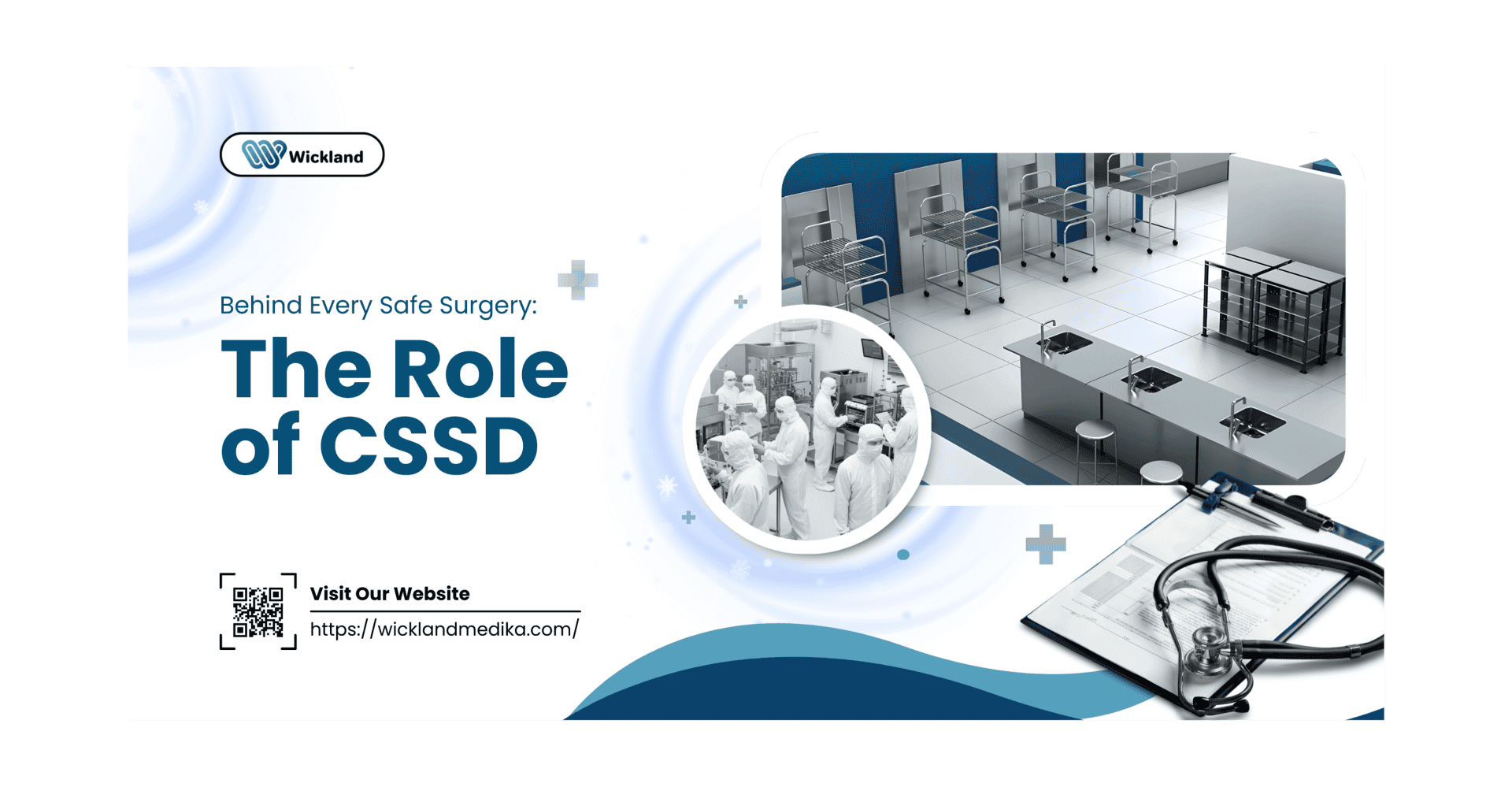
The Central Sterile Supply Department (CSSD) plays a crucial role in maintaining patient safety in healthcare facilities. It is responsible for cleaning, disinfecting, sterilizing, and distributing surgical instruments used in medical procedures. Proper instrument reprocessing helps eliminate microorganisms and prevent contamination. The World Health Organization and Centers for Disease Control and Prevention highlight that effective sterilization practices are essential to reduce healthcare-associated infections (WHO, 2016; CDC, 2017).
Studies show that inadequate sterilization can increase the risk of surgical site infections (SSI). Research published in Infection Control & Hospital Epidemiology and American Journal of Infection Control emphasizes that standardized sterilization protocols and proper monitoring systems significantly improve infection control in hospitals (Rutala & Weber, 2019; Alfa, 2019).
As healthcare standards continue to evolve, hospitals are placing greater emphasis on efficient CSSD management and validated sterilization technologies. Guidelines from the Association for the Advancement of Medical Instrumentation also stress the importance of standardized procedures and quality assurance systems within CSSD operations (AAMI, 2020).